
Republic of Guinea
Alluvial gold
mining in Guinea.
Apex Nimba SARL mines gold from alluvial deposits in the Siguiri area of northeastern Guinea.
Explore our locationA Guinean gold
mining company.
Apex Nimba SARL holds gold mining licence No. W965341RBA880988 and operates in the Siguiri area. Our focus is alluvial gold, found in the sands and gravels of river systems.
Our in-house engineers and equipment operators support our mining operations in Siguiri. Apex Nimba owns approximately 36 pieces of equipment in total, including tractor units, excavators and bulldozers.
Our company contact address is in Conakry, on Guinea’s Atlantic coast.
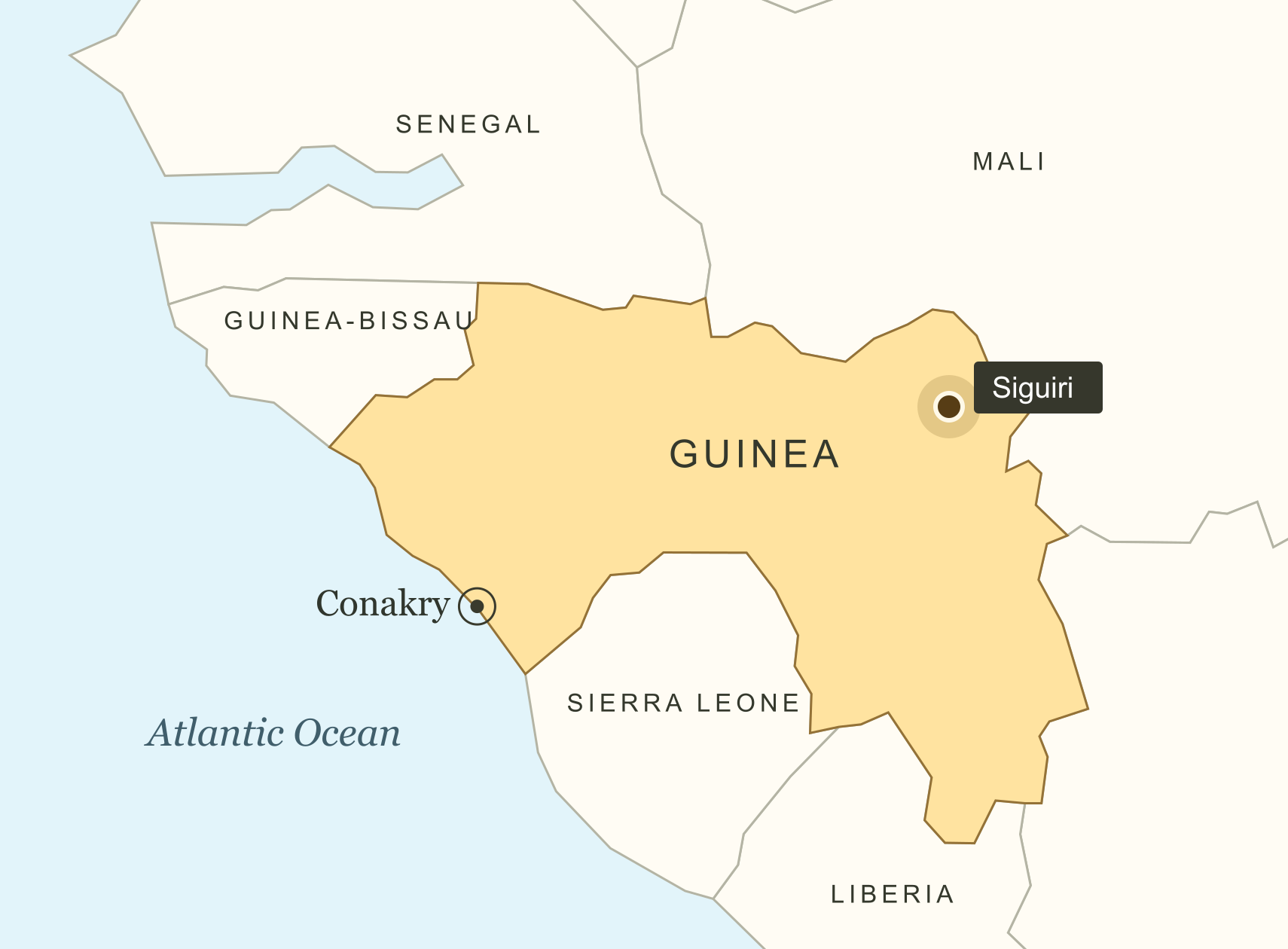
Siguiri, Guinea.
Guinea lies on the Atlantic coast of West Africa. Inland, in the Siguiri area of the Kankan Region, Apex Nimba mines alluvial gold. Our contact office is in Conakry, the capital, on the coast.
- Project stage
- Active production
- Operating area
- Siguiri, Kankan Region
- Company contact
- Conakry, Guinea
From river gravel
to gold.
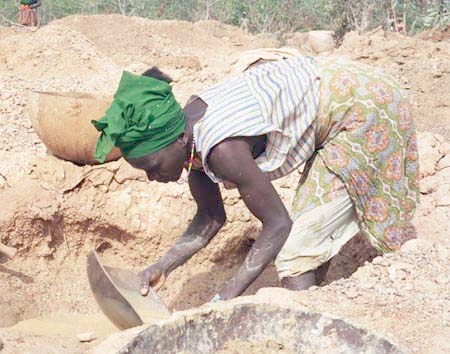
A river sorts sediment by weight as it flows. Alluvial miners use the same principle to recover grains of gold from sand and gravel.
01Reading the deposit
As gold-bearing rock weathers, it releases grains and flakes that streams carry downstream. Dense gold can settle into cracks in the bedrock or collect at the base of a gravel layer. An old river channel can preserve these pockets long after the river changes course.
02Sampling the gravel
Gold is unevenly distributed. Miners wash samples from several locations and depths, then compare the weight of gold recovered with the volume of gravel sampled. The comparison helps them decide which layers warrant further work.
03Washing and screening
Once miners excavate the selected gravel, water loosens the sand and clay around the grains. Screens separate oversized stones so the finer material can pass to the recovery stage.
04Separating gold by gravity
In a hand pan, gentle washing carries lighter grains over the rim while gold settles near the bottom. A sluice applies the same principle to a flowing stream of gravel and water. Low ridges on its bed trap gold along with other dense minerals. The collected material, called concentrate, can then be cleaned in smaller batches.
Industrial alluvial gold mining
At Siguiri, Apex Nimba is extracting alluvial gold with its own engineers and equipment operators. The following stages describe how a typical mechanised placer mine works a deposit.
Preparing and opening a cut
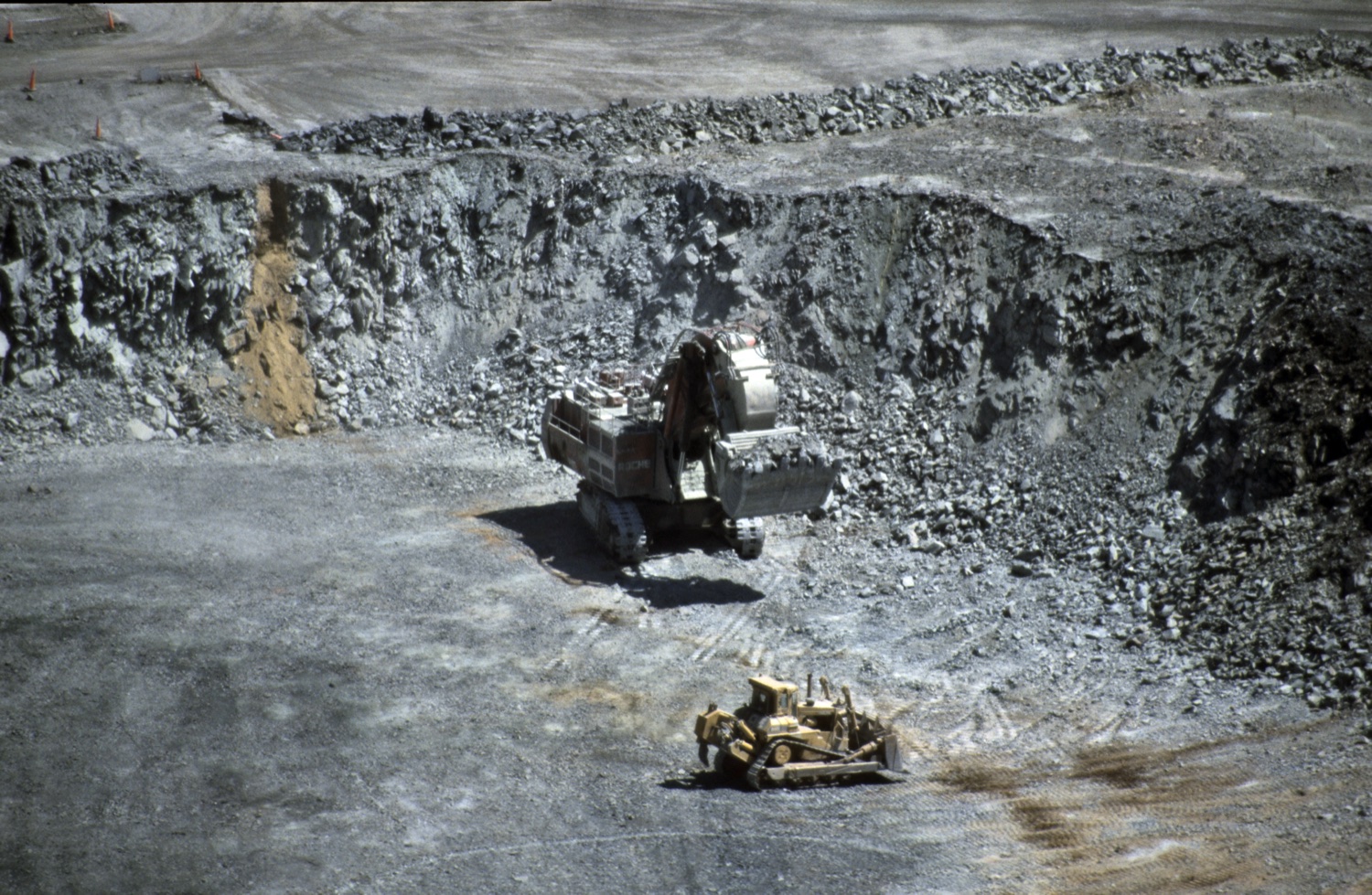
Engineers use gravel samples to identify the layer worth mining and plan the order of excavation. Bulldozers prepare access for machinery and set aside the overlying soil. This exposes the gold-bearing gravel and keeps it separate from material that does not need washing.
Moving gravel to the wash plant
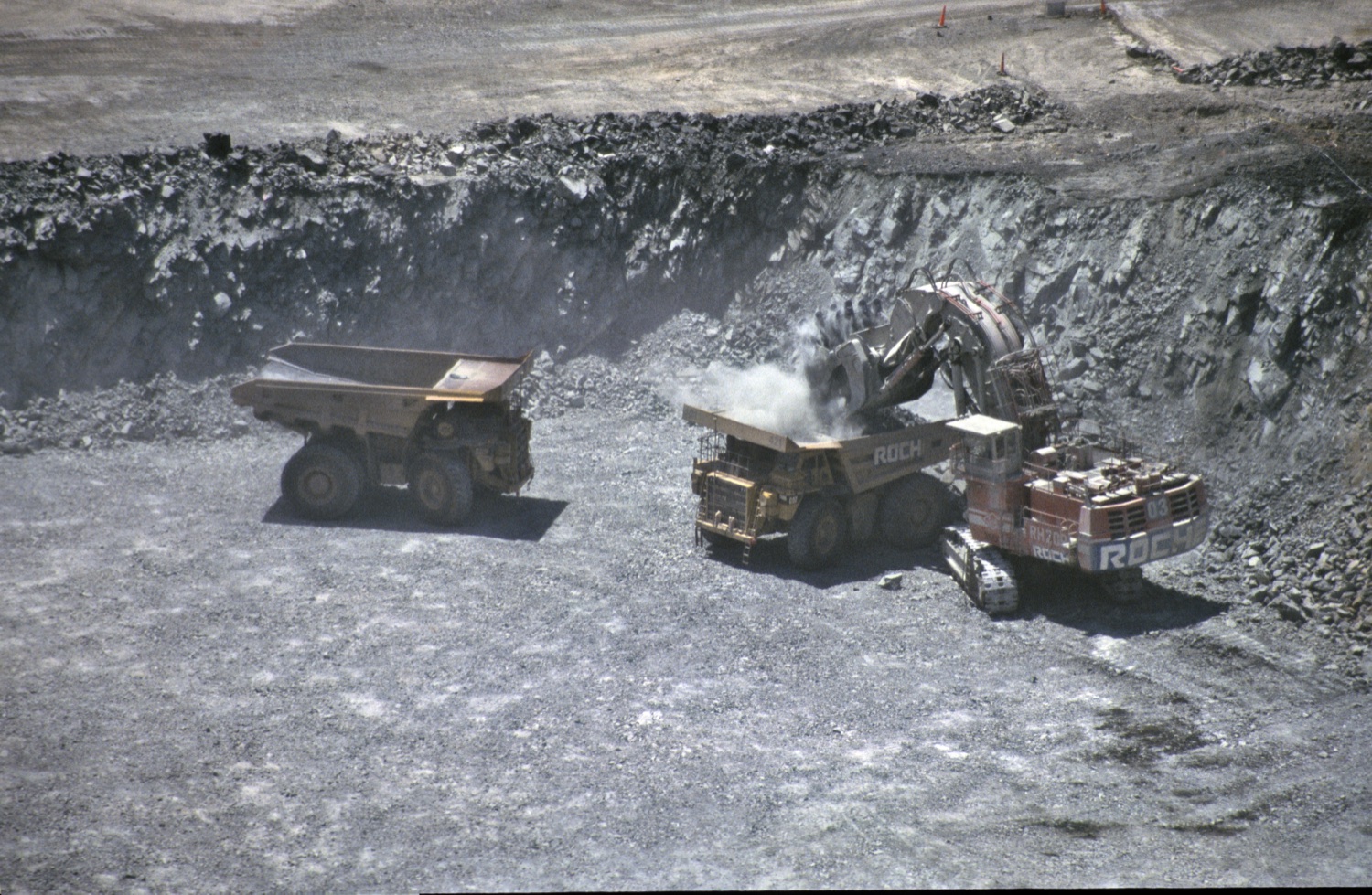
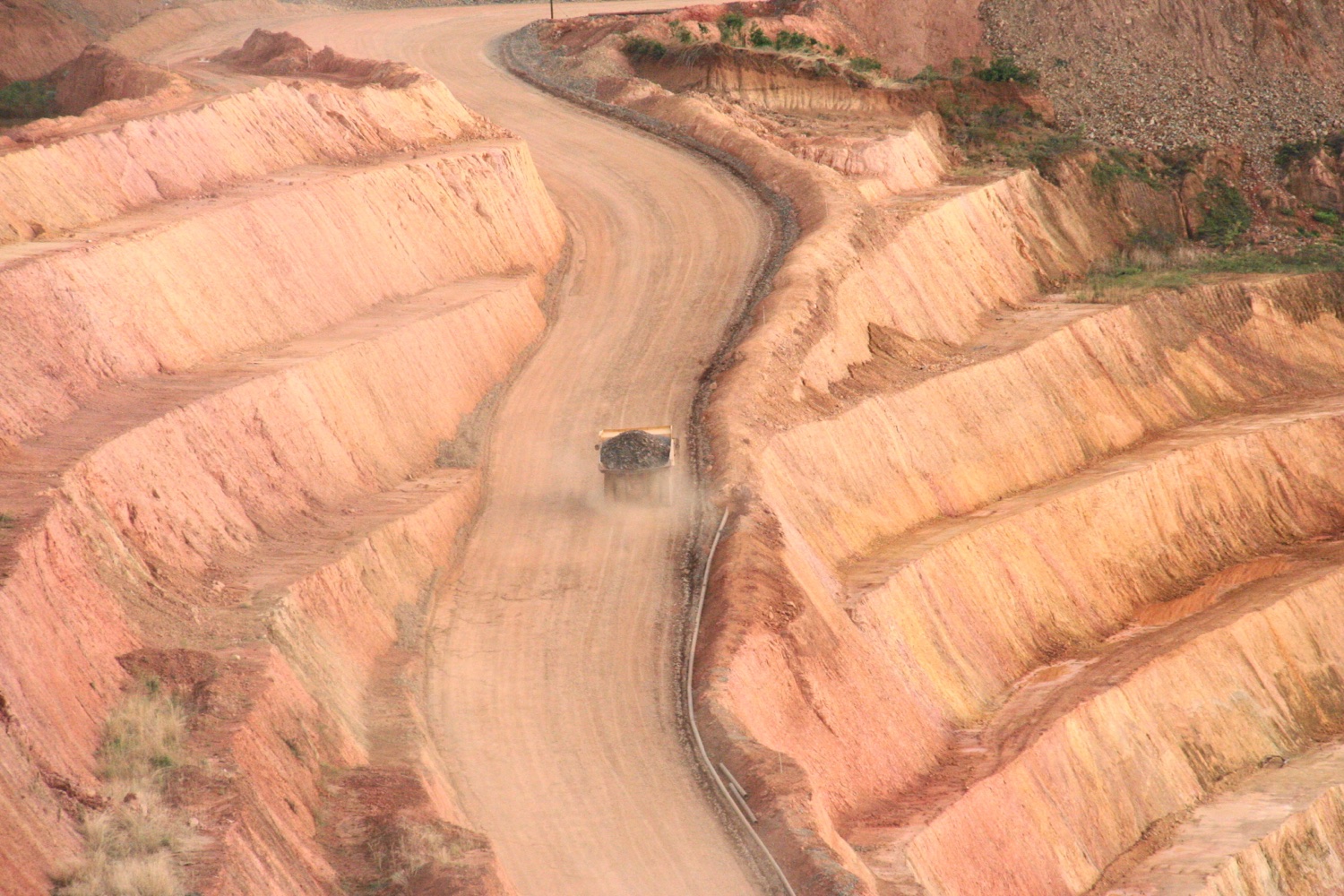
Excavators dig along the selected layer. Where the plant is close to the cut, an excavator can feed its hopper directly. Over longer distances, trucks carry the gravel to a stockpile so the plant can keep running between deliveries.
Recovering the heavy concentrate
At the plant, water breaks up clumps of gravel. A screen removes large stones, and the finer material flows through a sluice. Ridges in the sluice bed trap gold and other heavy grains. Operators periodically collect this concentrate for a final separation.
Managing water and worked ground
Wash water carries fine sediment away from the plant. Settling ponds allow the sediment to drop out so the water can be reused. As mining advances, crews can backfill completed cuts, reshape the ground and spread the soil set aside during preparation.
Life at the mine
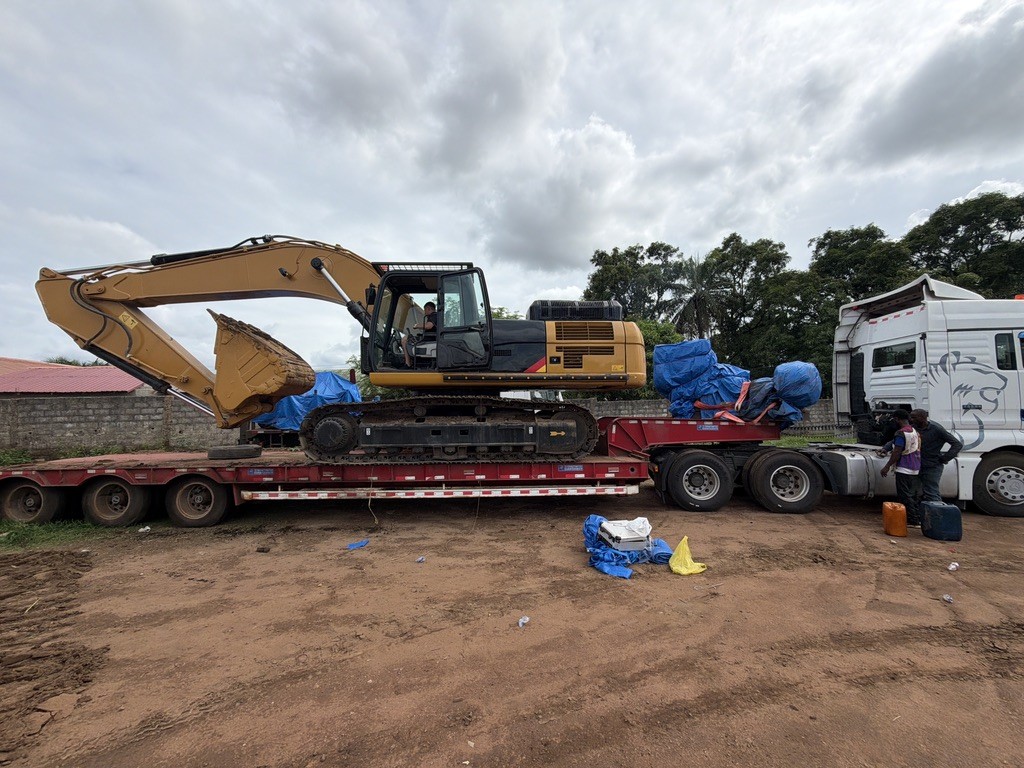
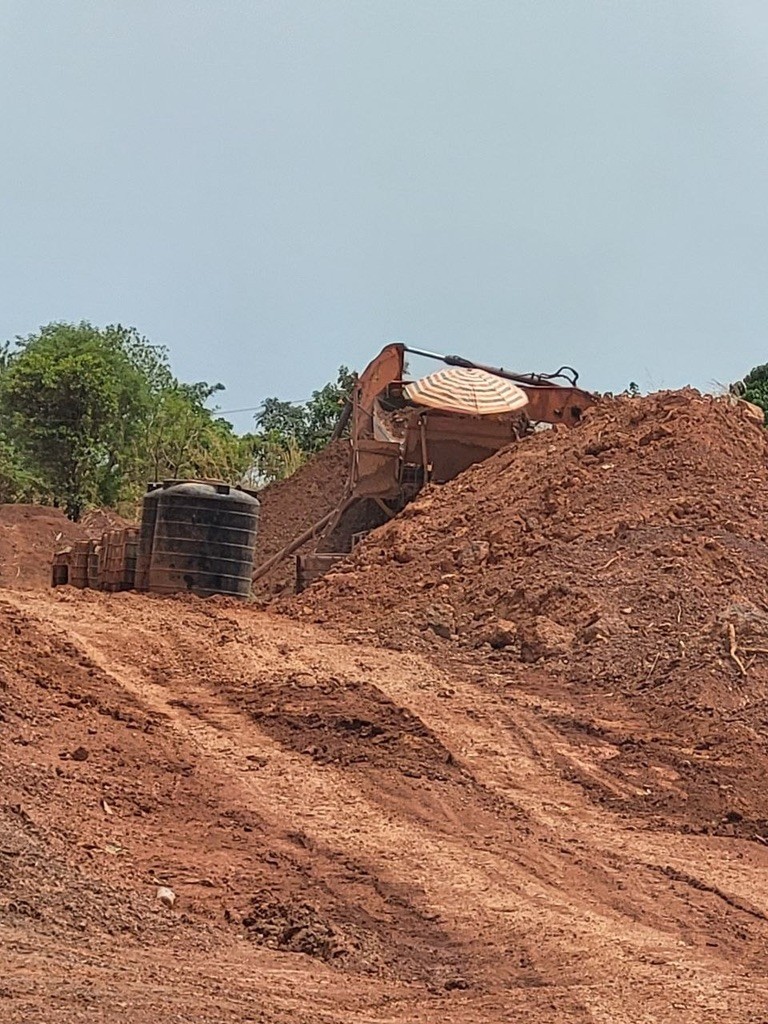
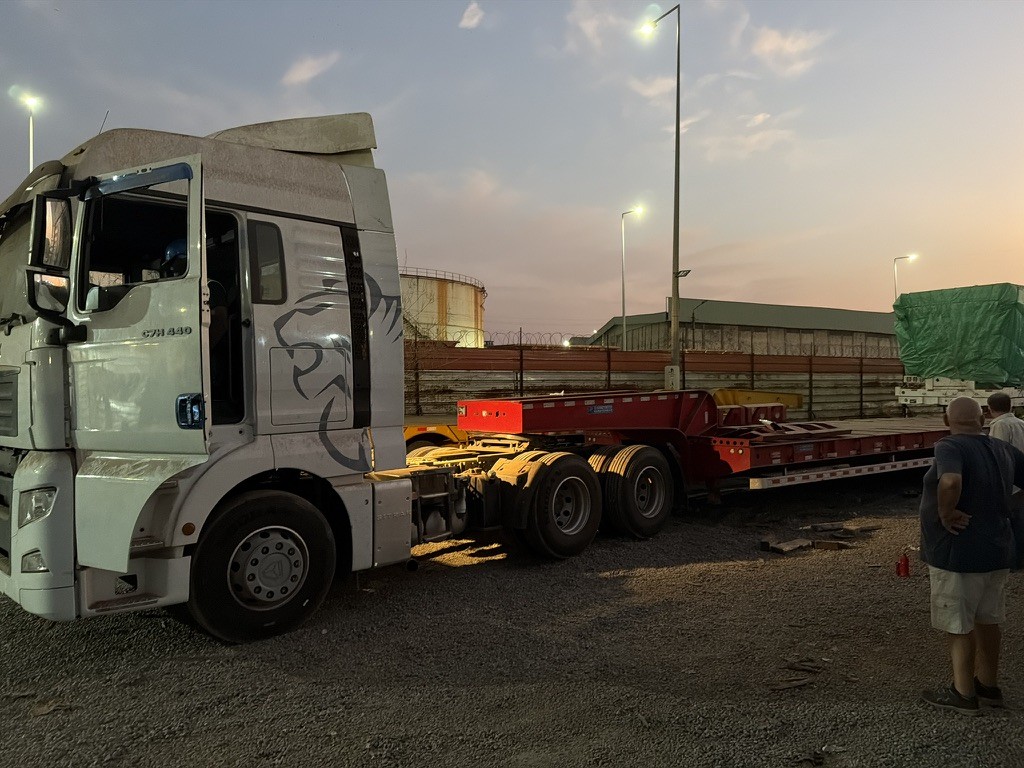
On a typical shift, the engineer identifies the layer of gold-bearing gravel and the excavator operator follows it as the ground changes. At handover, the crew records where digging stopped and which material is ready for washing.
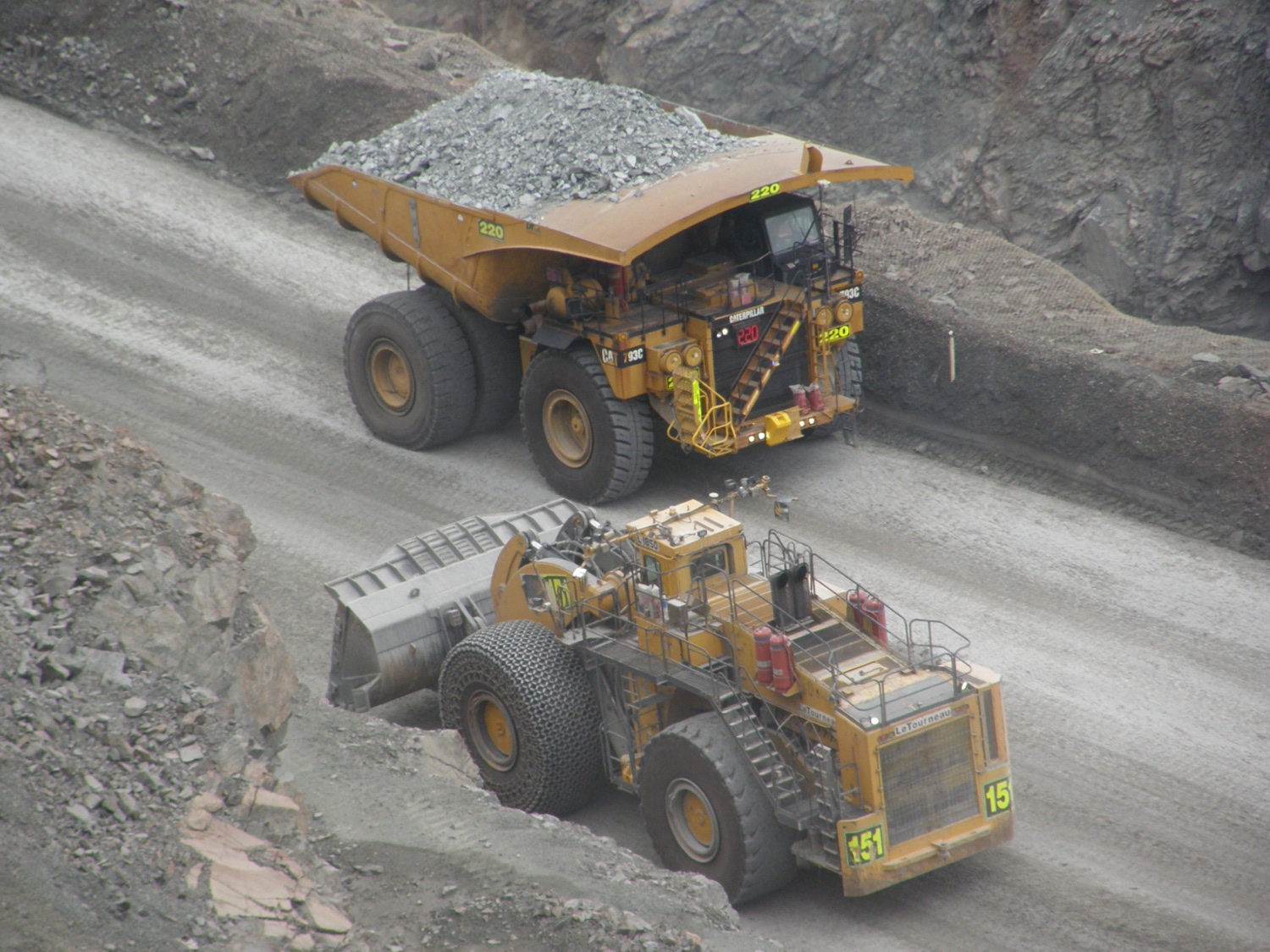
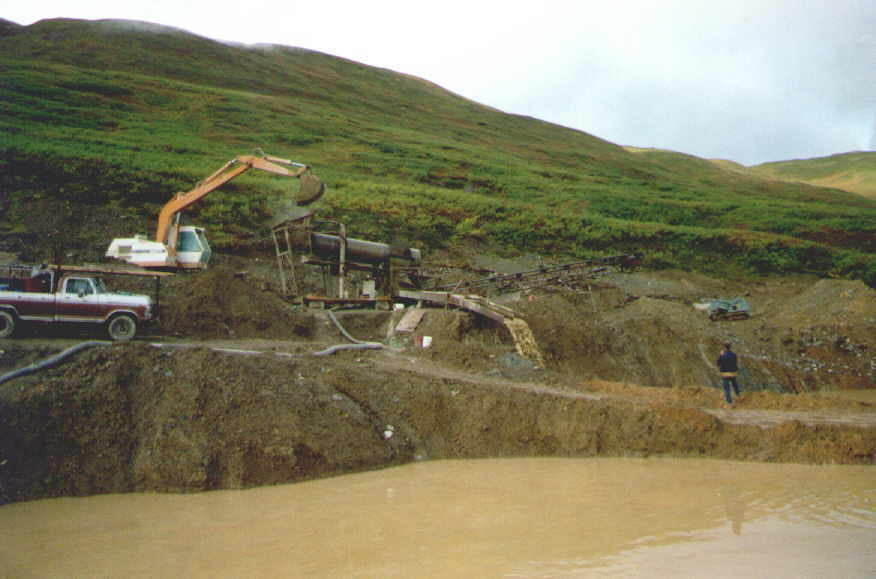
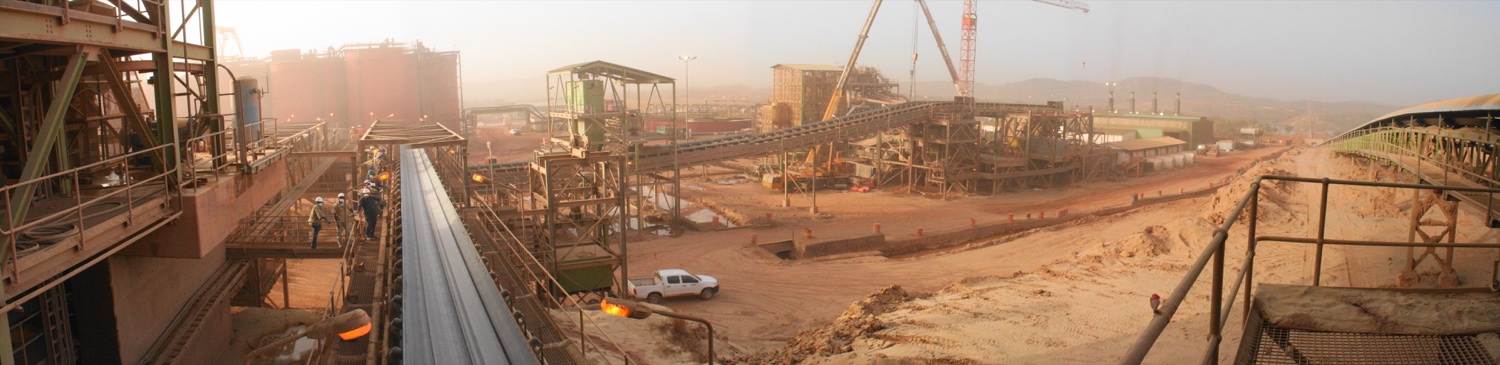
Read about a typical shiftIndustrial gold mining in pictures.
Get in touch.
For enquiries about our mining activities in Siguiri, contact the Apex Nimba team in Conakry.