
Life at the mine
Apex Nimba mines alluvial gold near Siguiri, in northeastern Guinea. Here, even a bucket of gravel comes with a question. Which layer did it come from?
The region has a long history of working gold by hand. A photograph from Siguiri Prefecture in 2000 shows a miner sorting material with a pan. On a mechanised site, the scale changes, but the search is still for small grains scattered through gravel.
Find Siguiri on the map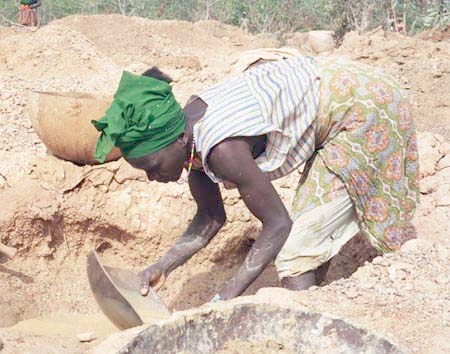
A typical shift
Before the first bucket. An engineer uses the results of gravel sampling to identify the layer to dig. The operator needs to know where that layer begins and ends. Two beds of gravel can look alike and contain very different amounts of gold.
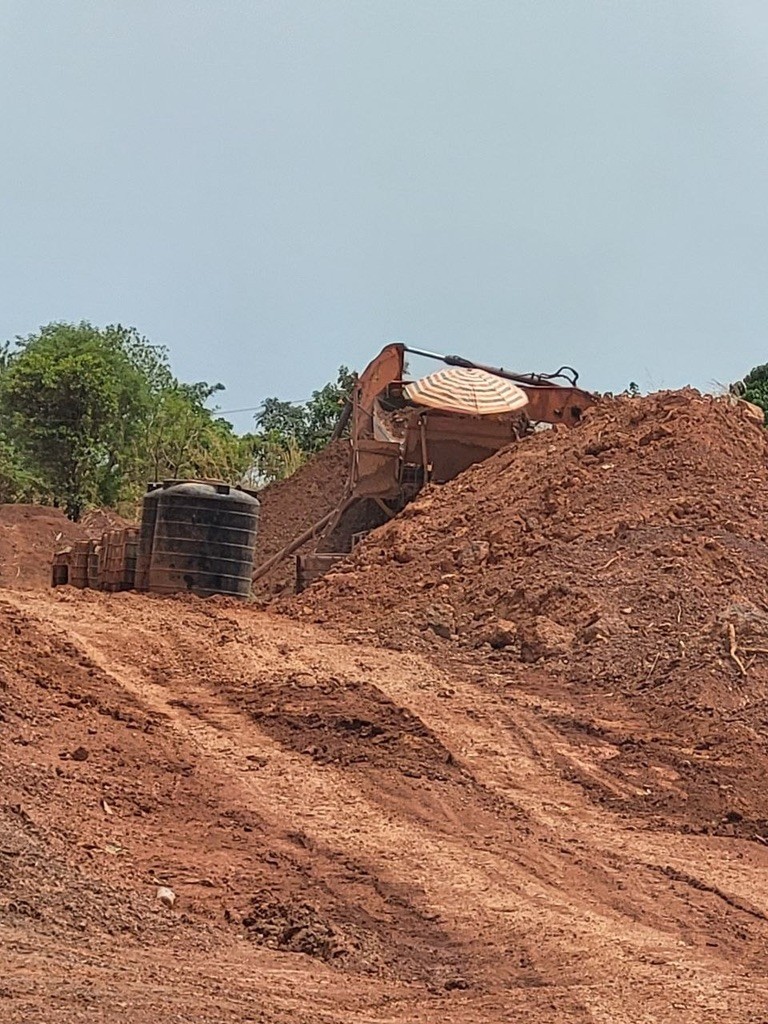
At the excavation. The operator follows the selected layer with the bucket. Mixing in the soil above it gives the wash plant more material to handle for the same amount of gold. If the layer changes or disappears, the crew can take another sample before digging further.
At handover. The outgoing crew can show the next shift where the cut stopped, which gravel is ready for washing and whether a machine needs attention. These details help the next operator pick up where the last one left off.
The people behind the work
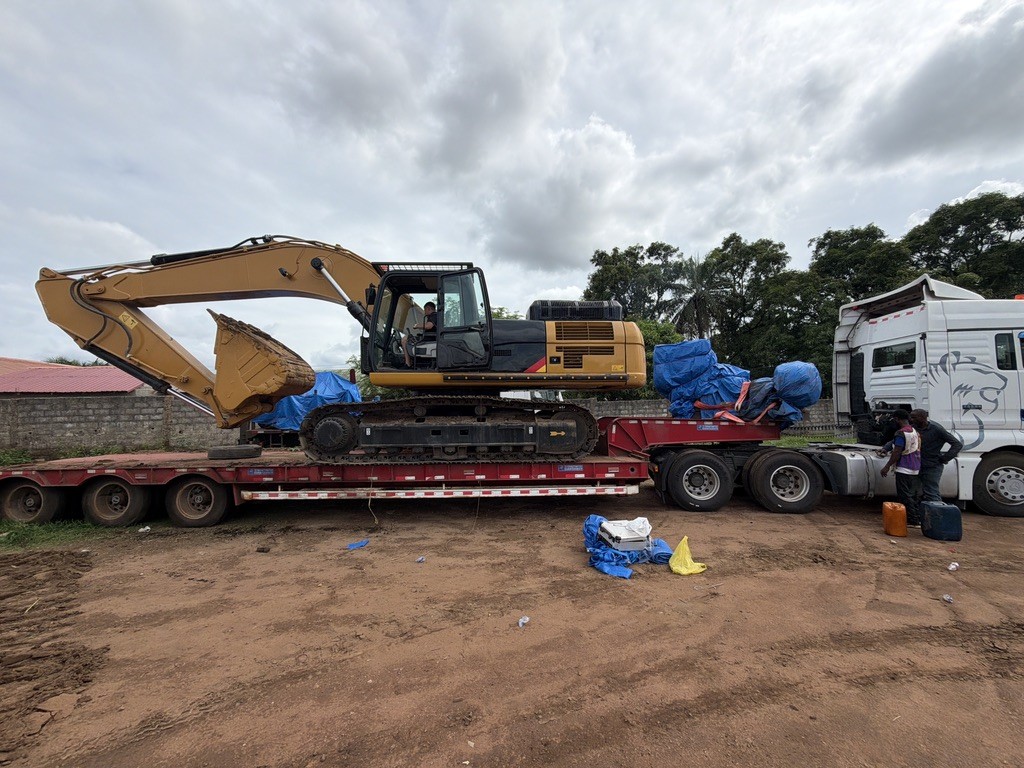
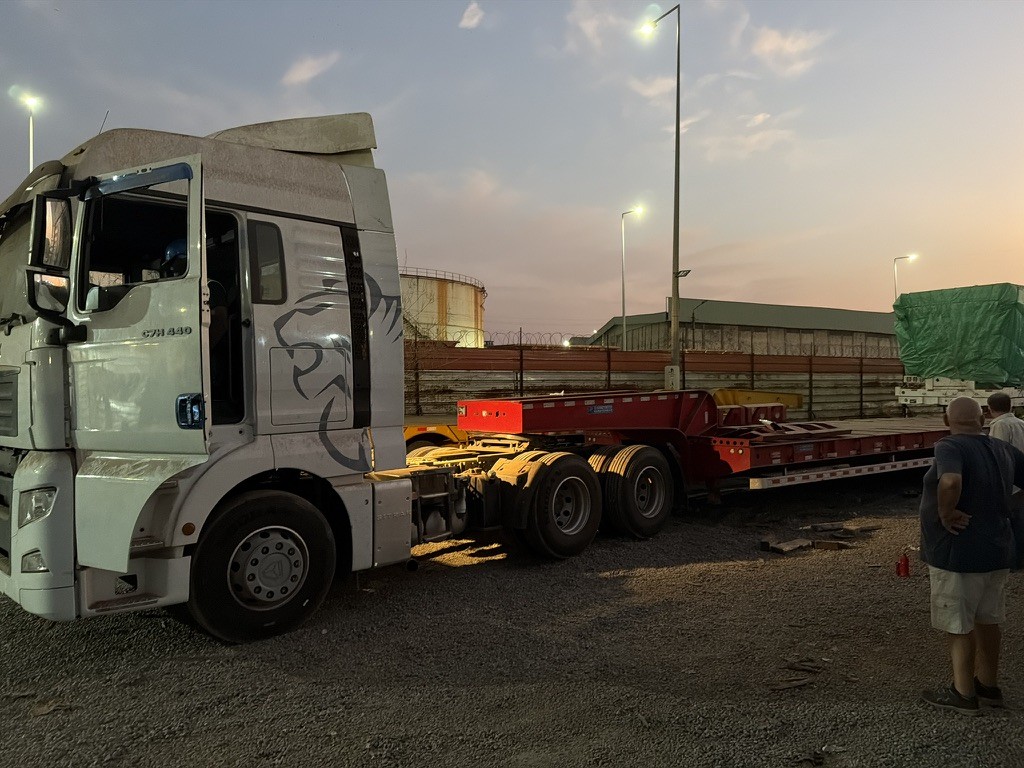
Apex Nimba has its own engineers and equipment operators. Three roles illustrate how people work together on a mechanised mine.
The engineer
A promising sample tells the engineer about one spot. Comparing it with samples from nearby ground helps the engineer decide where the crew should dig next.
The excavator operator
From the cab, a change in the colour or texture of the gravel can be easier to see than it is on a plan. The operator can flag that change for the engineer to check.
The mechanic
A bucket tooth wears a little with every load. Spotting wear during a check gives the crew a chance to replace a part during a planned stop.
Questions about gold
Can you see gold in the gravel?
Sometimes. A flake may be visible to the naked eye, but some grains are so small that you need a magnifier to see them. Washing a sample removes much of the sand and makes the remaining grains easier to spot.
Which is more common, a nugget or a grain?
Grains and small flakes are much more common in alluvial deposits. The large nuggets seen in photographs are unusual finds.
Can water alone separate gold?
Water and gravity can do much of the sorting. As a miner gently washes a pan, lighter sediment spills over the rim and dense gold tends to stay near the bottom. Heavy minerals can stay with it, so the last small batch still needs sorting.